


Every time a machine stops, a component fails or a part needs to be replaced, production, maintenance and purchasing managers face the same question: do we manufacture a custom industrial part? The answer is not always obvious, and making the wrong decision can cost money, time and productivity.
The starting point: not all parts are the same
Before comparing costs, it is necessary to understand that the market for industrial and mechanical components works by volume. Manufacturers standardize to reduce production costs, and this is a great advantage when your need fits the standard. But when it does not fit, the standard becomes a problem.
The first question you should ask yourself is: does this part exist exactly as I need it? If the answer is “more or less” or “no”, you are in custom manufacturing territory.
The standard part does not exist or requires modification
When the geometry, material, tolerance or function you need cannot be found in any catalogue, custom manufacturing is the only real option. Trying to adapt a standard part that “looks similar” but is not exact can lead to performance problems, premature wear or even breakdowns.
Common examples:
- Components for old machinery without spare parts
- Parts with special geometry for specific applications
- Elements with very strict tolerances
- Components manufactured with special materials (stainless steel, titanium, technical polymers)
The total cost of the standard solution is higher than it seems
Here you have to really do the numbers. A catalogue part may seem cheaper, but if it requires adapters, subsequent modifications, or if its lower performance leads to frequent replacements, the total cost (TCO, Total Cost of Ownership) may exceed that of the custom-manufactured part.
Practical economic criterion:
| Factor | Standard part | Custom part |
| Initial unit cost | Low | Medium-high |
| Setup cost | None | Yes (amortizable) |
| Service life | Standard | Optimizable |
| Adaptation to the system | Partial | Total |
| Supplier dependency | High | Low |
| Frequent replacement cost | Cumulative | Reduced |
Volume justifies the amortization of the mold or programming
From certain quantities onwards, in-house manufacturing or outsourcing to a specialized workshop is clearly more economical. The break-even point varies greatly depending on the type of part, but as a general rule: if you expect to need the component on a recurring basis, the initial investment in custom manufacturing is quickly amortized.
Quality and process control are priorities
When the part plays a critical role in the safety, precision or durability of your product, manufacturing it to measure allows you to control every parameter: certified material, specific surface finishes, heat treatments, dimensional control. Buying a standard part means relying on the manufacturer’s specifications, which may not exactly match your real needs.
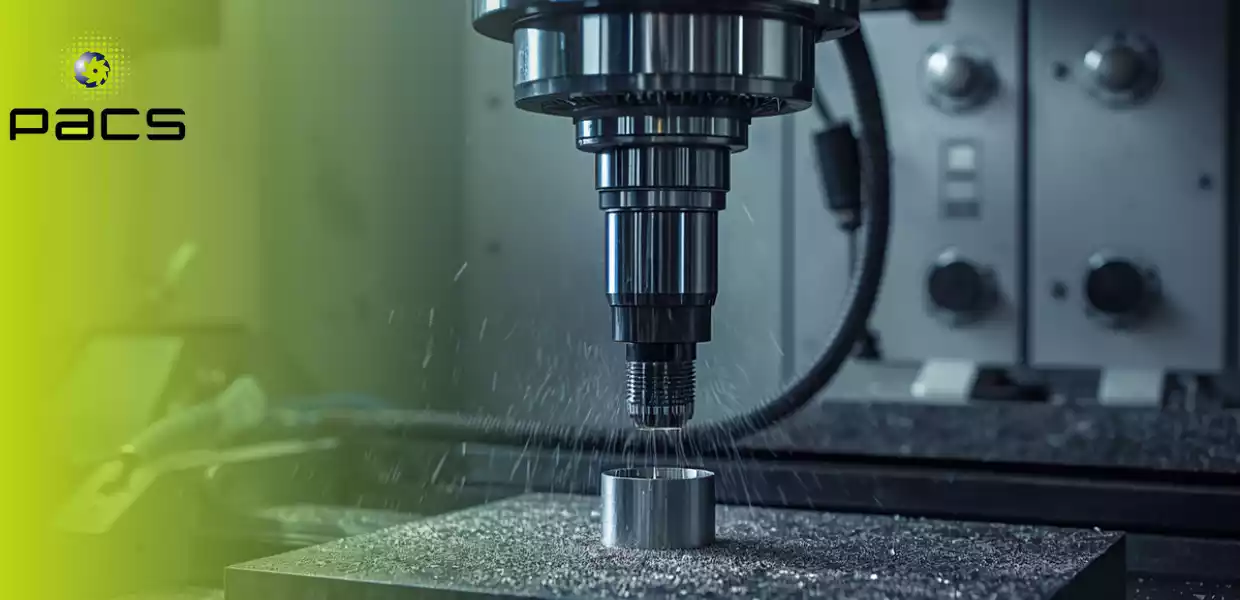
Manufacturing of custom industrial parts with Tallers PACS
At Tallers PACS we work in the manufacturing of custom industrial parts to respond to the specific needs of each project, with adapted, precise solutions focused on durability. If you need to manufacture a special part, replace a component or study the best option for your machinery, contact us.